
Quick & Cozy: How I Made a Beautiful Scarf with Sensy’s Super Soft Saver Yarn
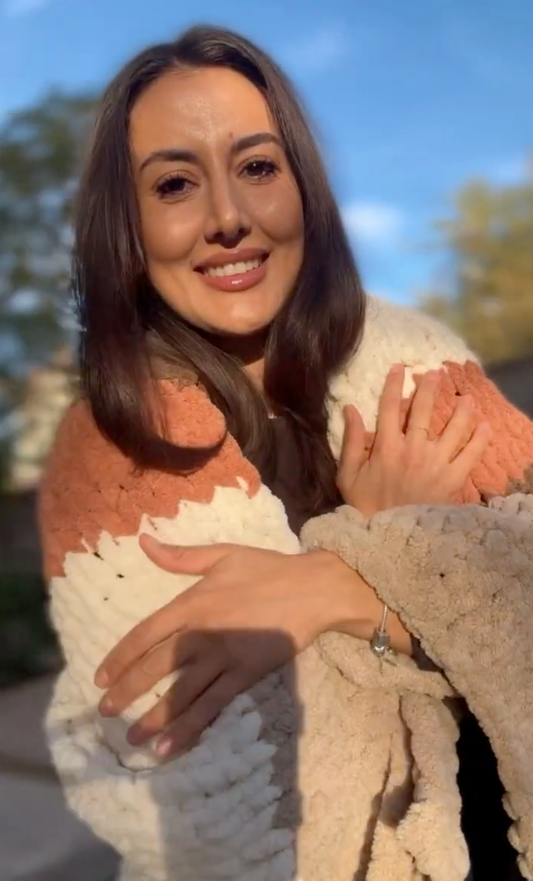
Today I turned a simple stitch sequence into a soft, gorgeous scarf using Sensy’s Super Soft Saver yarn. This post walks you through the exact step-by-step process I used — from casting on to binding off — so you can make one too.

Materials
-
Sensy’s Super Soft Saver yarn (amount depends on desired length; I used one or two skeins).
-
A pair of knitting needles appropriate for the yarn (check the yarn label for recommended needle size).
-
Scissors, tapestry needle for weaving in ends.
-
Optional: measuring tape, stitch marker.
Finished size (example)
-
My scarf: started with 24 stitches — adjust cast-on count wider or narrower depending on how chunky or slim you want the scarf.
-
Target length: knit until the scarf reaches your preferred length (typical scarves are 50–70 inches / 127–178 cm).
 Step-by-step pattern
1. Cast on

Cast on 24 stitches (or your preferred number). Use any cast-on method you like (long tail, knitted cast-on, etc.).
2. Setup rows


-
Row 1: Knit all stitches (this creates a neat edge).
-
Row 2: Purl all stitches (creates a reversible texture when combined with Row 1).
Repeat these two rows for the body of the scarf:
-
Odd rows: Knit (K)
-
Even rows: Purl (P)
This simple garter/stockinette-ish combo (plain row / purl row) builds a softly textured fabric — easy and great for beginners.
3. Continue until the scarf is large enough

Keep alternating knit and purl rows until the scarf reaches your desired length. Periodically check the width and length and try it on over your shoulders to decide when to stop.
4. Binding off (finishing)


Here’s the exact method I used:
-
Knit two stitches together (k2tog).
-
Place that resulting stitch back onto the right needle so you still have the same number of live stitches and can continue — repeat the k2tog + replace process across the row until all stitches have been worked.
-
This creates a neat, slightly elastic bind-off and gives a tidy finished edge.
-
-
Cut the yarn leaving a 6-8 inch tail. Pull the tail through the last loop to secure.
Note: If you prefer a standard bind-off, you can also knit one, pass first stitch over the second, repeat across. The method above gives a slightly different look — try both to see which you like.
5. Weave in ends & block (optional)

-
Thread your tapestry needle and weave the loose ends into the fabric on the wrong side.
-
If desired, gently block the scarf to even out stitches: lightly wet or steam and lay flat to dry, shaping to final dimensions.
Tips & variations
-
Wider scarf: cast on more stitches (multiples of 2 or any even number for symmetry).
-
Chunkier look: use larger needles or thicker yarn.
-
Texture swap: try ribbing (K2, P2) or seed stitch for a different surface.
-
Fringe: add fringe at each end before finishing for a classic look.
-
Color play: alternate skeins for stripes or try holding two colors together for marled effect.
Short wrap-up

This was a simple, satisfying project — a knit row, a purl row, repeat — finished with a tidy bind-off. The result: a soft, beautiful scarf made from Sensy’s Super Soft Saver yarn. Happy knitting!
Tags:
Previous
Sparkly Black Openwork Blouse with Sensy Shine Yarn – Easy Elegant Top (Free Pattern Idea)
Next
DIY Canvas & Rope Bag — Quick and Stylish with Sensy Materials